Finding the right body art transfer paper starts with clarity, precision, and compatibility with your tattoo or stencil workflow. This guide focuses on five top options that balance crisp transfers, durability, and ease of use for both professionals and aspiring artists. Whether you’re tracing intricate designs or prepping large sessions, these papers help ensure your lines stay sharp from print to skin. For context, each option below is suited to different use cases such as studio work, practice sketches, or DIY body art projects.
| Product | Best For | Key Benefit |
|---|---|---|
| Miuxia Tattoo Transfer Paper | Beginners and studios | All-around, crisp transfers with four layers |
| Jacquard Spirit Transfer Paper | Practice ideas and test designs | Safe, non-toxic, long-wear designs |
| Emalla Tattoo Transfer Paper | Detailed designs | Professional-grade, high-definition transfers |
| BIOMASER Tattoo Transfer Paper | Large projects | High-visibility, precise outlines |
| Phomemo Tattoo Transfer Paper | Digital-to-skin transfers | Four-layer durability with printer compatibility |
Miuxia Tattoo Transfer Paper Overview
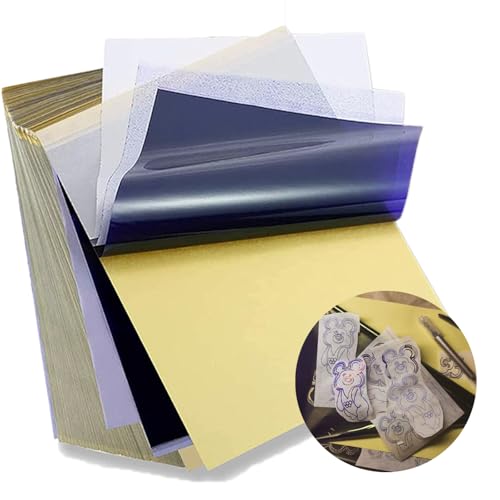
Best for beginners and studio use, Miuxia offers standard A4 sheets with four transfer layers. The paper is light and smooth, designed to yield crisp, dark outlines suitable for tattoo artists and students alike. The kit is noted for minimal fading and reliable transfers, even for first-time users.
Why selected: It provides a balanced, all-purpose option suitable for learning and routine practice. The four-layer structure supports clean tracing from master design to skin, reducing the need for rework during a session.
Caution: Some users may prefer thicker sheets for very large or detailed pieces; plan for smaller batches if you work on expansive canvases.
Jacquard Spirit Transfer Paper

Best for testing ideas and non-permanent practice, Jacquard Spirit is a non-toxic option that provides designs that resemble real tattoos. The material supports sessions where the artist wants to evaluate placement and flow before committing to longer pieces.
Why selected: Its safe composition makes it suitable for practice environments and for clients who want to preview how designs will read on skin. The 1–2 week wear window helps gauge impact without permanent commitment.
Caution: Results may vary with skin type and ensure proper aftercare to maintain legibility during wear time.
Emalla Tattoo Transfer Paper

Best for detailed, precise designs, Emalla uses a four-layer structure to deliver high-definition transfers with crisp lines. The double-sized pack (100 sheets) is designed for studios and serious practice sessions, enabling more opportunities to transfer complex artwork onto skin.
Why selected: Its professional-grade construction helps maintain transfer fidelity across large or intricate designs, reducing the need for re-drawing during a session.
Caution: Larger packs require organized storage to prevent paper curls or moisture exposure that could affect performance.
BIOMASER Tattoo Transfer Paper

Best for bold, long-lasting outlines across skin tones, BIOMASER emphasizes high-visibility, high-definition transfers. Its A4 size is flexible for large designs and easy trimming for smaller pieces. The carbon layer supports crisp outlines and clear visibility throughout long sessions.
Why selected: It suits artists who need reliable, sharp transfers that stay visible as they work, reducing the risk of re-drawing mid-session.
Caution: The sheets should be cut with clean edges to maintain transfer quality; rough cuts can create uneven lines.
Phomemo Tattoo Transfer Paper

Best for digital-to-skin transfers and printers, Phomemo provides a durable, four-layer design compatible with common tattoo printers. It supports easy tearing along dotted lines, speeding up setup for faster sessions and consistent results across multiple sheets.
Why selected: The combination of printer compatibility and simple tearing makes it convenient for designers who routinely move between digital art and skin work.
Caution: Ensure your printer compatibility and follow the four-layer usage steps to avoid misalignment or wasted sheets.
Buying Guide
- What design complexity do you handle? Choose papers marketed as high-definition or 4-ply for intricate or large designs to preserve detail.
- How do you transfer the design? If you use printers, look for papers explicitly described as printer-compatible and note any inkjet or laser requirements.
- Is skin safety a priority? For beginners and clients with sensitivity, prefer non-toxic options and clear wear-time guidance.
- What is your typical session length? Longer sessions benefit from papers with durable carbon layers that resist smudging and fading.
- What size fits your workflow? A4 is common and versatile; larger sheets allow full sleeves, while smaller sheets can be trimmed for precision tasks.
- Storage and handling? Store in a cool, dry place to prevent curling or moisture damage that could degrade transfer quality.
FAQs
- What is tattoo transfer paper used for? It transfers a stencil from master design to skin, enabling accurate tracing during tattooing or body art projects.
- Can I reuse transfer paper? Reuse is generally not recommended; most papers are designed for single-use transfers to maintain line sharpness.
- Do I need stencil ointment? Some papers require a stencil medium for best transfer; check the product instructions for compatibility.
- Will transfer ink stay on skin long? Transfer durations vary by paper quality and skin type; expect temporary outlines suitable for the tattoo session.
- Can I cut sheets to smaller sizes? Yes, most 4-ply stencil papers can be trimmed to suit smaller designs or printable layouts.
- Is it safe for all ages? Opt for non-toxic options and follow aftercare guidelines to minimize skin irritation.