Looking for the best black dye for wood that delivers deep, even color without muddying grain? This guide highlights five top options ideal for DIYers, furniture restorers, and professional woodworkers. Each pick is evaluated for ease of use, finish depth, and suitability across indoor and outdoor projects. Whether you want a transparent, grain-enhancing stain or a solid black pigment, these products help you achieve consistent results with minimal effort.
| Product | ||
|---|---|---|
| TransTint Dyes, Black, 2oz | Professional color control; multiple finishes | Highly concentrated; mix with water or alcohol |
| Ninesung Black Wood Dye Powder | All surfaces; quick-dry, outdoor friendly | Powder form; activate with water |
| Furniture Clinic Wood Stain, Black | Water-based, low odor; indoor/outdoor use | One-coat coverage; 12 colors available |
| Minwax Wood Finish True Black | Oil-based deep penetration | Fast drying; classic interior stain |
| Keda Dye Black Wood Stain Powder | Professional-grade powder stain | 25g yields large volume; simple activation |
Buyer profiles: TransTint is great for professionals seeking precise color control. Ninesung powder suits hobbyists and outdoor projects due to its versatile activation. Furniture Clinic is ideal for DIYers wanting low odor and easy cleanup. Minwax appeals to those who want quick, deep interior color with a classic finish. Keda Dye powder is perfect for users who prefer a cost-effective powder that can be mixed into custom concentrations. The following sections provide detailed, product-specific guidance to help you pick the right black dye for your project.
TransTint Dyes, Black, 2oz

TransTint Dyes are professional-grade concentrated liquids designed for precise color control. The 2 oz bottle yields a large amount of dye-stain and is compatible with water, alcohol, shellac, and lacquer finishes, as well as General Finishes products. This dye enhances grain transparency and avoids muddy results common with powdered dyes. Best for: professionals or serious hobbyists who want control over color strength and are blending with various finishes. Limitation: extremely concentrated; requires careful measurement to avoid over-darkening. Reason for selection: outstanding color clarity and broad finish compatibility enable fine-grained color matching across projects.
Ninesung Black Wood Dye Powder

NINESUNG Wood Dye Powder is a fast-drying, highly concentrated powder that activates with water. It works on all indoor and outdoor wood surfaces and offers excellent coverage with even color penetration. Best for: those who want a simple powder-to-liquid workflow and broad material compatibility. Better for: projects where quick drying and outdoor resilience matter. Caution: powder form requires accurate mixing to achieve consistent darkness; follow the specified activation and application steps.
Furniture Clinic Wood Stain, Black

Furniture Clinic Wood Stain is a water-based option offering low odor and non-toxicity. It provides even color penetration and is available in 12 colors, with one-coat coverage highlighted as a key benefit. Best for: DIY enthusiasts seeking a user-friendly, environmentally friendlier stain for indoor and outdoor furniture. Choose this if low odor and easy cleanup are priorities. Limitation: deeper colors may require additional coats for uniform depth in some woods.
Minwax Wood Finish True Black Stain
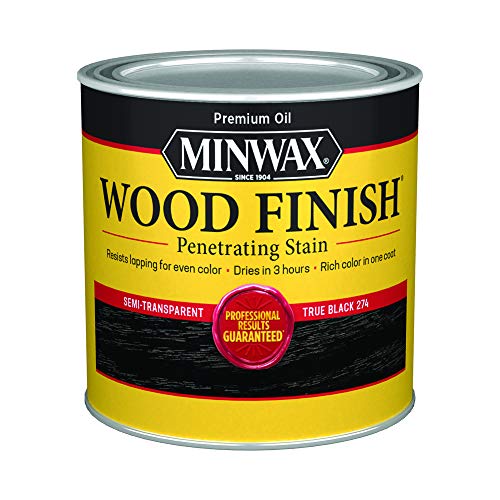
Minwax Wood Finish True Black is an oil-based, deep-penetrating stain designed for interior use. It provides a rich, even color that enhances natural grain in one coat, with a quick 5-minute penetration and a 2-hour dry time. Best for: traditional interior projects like furniture, cabinets, and doors where a deep, classic black is desired. Caution: oil-based formulations can raise wood grain and require mineral spirits for cleanup; size and drying times vary by wood type.
Keda Dye Black Wood Stain Powder

Keda Dye Black Wood Stain Powder provides a professional-grade option in powder form. The package includes 25 grams of dye powder, designed to yield a transparent, clean black stain when activated with water. Best for: users who want to mix precise concentrations into their preferred solvent system. Limitation: powder form requires careful measurement and mixing to achieve uniform color; one batch can be used to create larger volumes of stain.
Buying Guide: Key Considerations For Choosing Black Wood Dyes
- Finish type: Do you want a transparent grain-enhancing stain or a solid, opaque black? Water-based dyes tend to emphasize grain, while oil-based stains deepen color with more saturation.
- Application medium: Consider whether you’ll work with water, alcohol, shellac, lacquer, or other finishes. Some dyes pair better with certain topcoats.
- Drying time: Fast-drying formulas reduce project time but may require faster work for even coverage. Slower drying often allows more work time for blending.
- Odor and cleanup: Water-based options generally offer low odor and easier cleanup; oil-based stains require solvent-based cleanup.
- Wood type and condition: Soft woods may require fewer coats, while dense hardwoods might need deeper penetration or multiple applications for uniform color.
- Color strength and control: Concentrated dyes demand careful measurement. Powder dyes offer economical bulk use but require precise mixing.
Practical tips for best results
- Test color on a scrap piece of the same wood before committing to a project.
- Wipe off excess stain promptly to avoid blotching, especially on open-pore woods.
- Follow the recommended topcoat compatibility to preserve color and prevent bleed or fading.
FAQ
- What is the easiest black dye for beginners?
Water-based stains like Furniture Clinic Black are typically easiest for beginners due to low odor and simple cleanup.
- Can I mix black dye with other colors to adjust shade?
Yes. Concentrated liquid dyes (like TransTint) are designed to be mixed with other colors in compatible finishes to create custom shades.
- Are black wood stains suitable for outdoor use?
Some products, such as powder dyes formulated for outdoor surfaces, are designed to perform outside, while others are best kept to indoor projects.
- Do I need pre-sand or seal the wood before applying dye?
Yes. Smoothing the surface and removing old coatings help achieve even penetration and reduce blotching.
- How many coats are usually needed for a deep black?
Interior oil-based stains often require 1–2 coats; water-based stains may need 2–3 coats for full depth on some woods.
- What should I use to clean up after staining?
Follow the stain’s cleanup instructions; water-based formulas typically clean with soap and water, while oil-based formulas need mineral spirits.