Whether you’re assembling quilt bindings, organizing fabric blocks, or planning a design wall for quilts, the right tools can streamline the process. This guide highlights five top binding-related products that help quilters fold, measure, press, and display with ease. Below you’ll find practical details, usage ideas, and a buying guide to compare options from compact binding makers to sturdy design boards.
| Product | Brand | Key Benefit |
|---|---|---|
| Taylor Seville Magic Binding Maker 2.25″ | Taylor Seville | Creates binding strips; folds fabric evenly |
| SAVINA Wool Pressing Pad 24×18″ | SAVINA | Premium wool pressing surface for accurate ironing |
| Buryeah Quilt Design Wall 16×12″ | Buryeah | Portable design wall panels for fabric layout |
| Wavwavw Acrylic Quilt Binding Tool (6″ & 3″) | Wavwavw | Two-binding sizes for precision binding |
| Purple Hobbies Third Hand Binding Folder | Purple Hobbies LLC | Hands-free binding folding aid for easier binding |
Taylor Seville Magic Binding Maker 2.25″

The Taylor Seville Magic Binding Maker is a compact tool designed to streamline binding construction. It shapes fabric into ready-to-sew binding strips by folding fabric into precise halves, helping quilters achieve consistent widths. This 2.25-inch option to create standard bindings makes it a practical addition for projects that require frequent binding preparation. The device is also offered in a larger 2.50-inch size, giving quilters a choice based on project needs. Its small footprint helps keep a sewing space organized while delivering reliable results for quilting and other craft bindings.
Key features include a versatile folding mechanism, a compact form factor, and two width options that cover common binding sizes. For storage-minded makers, the 2.25-inch model provides a quick path from fabric to binding strip, reducing measurement errors and speeding up workflow. Consider pairing with compatible fabrics and an ironing station to finalize edges after preparation.
SAVINA Wool Pressing Pad 24×18
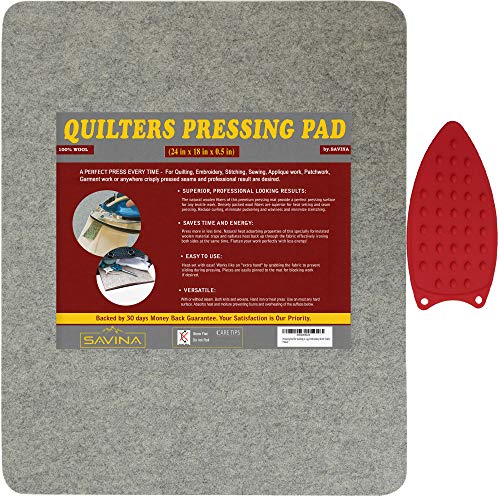
This 100% New Zealand wool pressing pad provides a dense, stable ironing surface ideal for quilting seams and detailed work. The wool’s interlocking fibers resist stretching, helping to preserve fabric geometry as you press. It’s designed for use with or without steam and is suited for sewing, embroidery, and DIY crafts. The pad’s portability makes it easy to bring to classes, retreats, or hotel rooms, ensuring consistent pressing results wherever you work.
Benefits include a natural, heat-conductive surface that reduces fabric slippage and a compact size that fits standard ironing spaces. The pad is compatible with a range of materials, from light cottons to denser textiles, making it a versatile base for block assembly and seam finishing. For best results, pair with a quality iron and a pressing cloth to protect delicate fabrics.
Buryeah Quilt Design Wall Board Set (6 Pack)
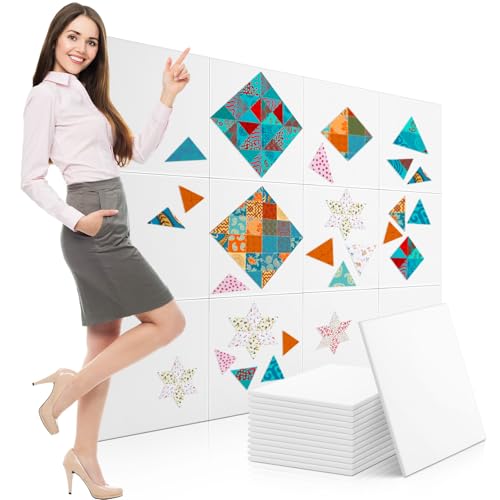
The Buryeah quilt design wall panels offer a practical display and layout surface for fabric blocks. Each board measures 16 x 12 x 0.5 inches, and a pack includes multiple panels to cover larger workspaces. They’re lightweight and can be arranged on walls or tables, providing a flexible design area for planning quilt blocks, color placement, and geometric compositions. The panels support various fabrics, including medium-weight canvas, linen, silk, and polyester, enabling versatile project planning.
Usage tips include arranging panels in a grid to map out block layouts, using additional stands or wall mounting as needed, and pairing with double-sided tape for wall mounting when appropriate. While not a rigid hardboard, these felt-like panels excel at pinning and quick rearrangement during design sessions or quilting classes.
Wavwavw Acrylic Quilt Binding Tool Set (6″ & 3″)

This two-piece acrylic binding tool set includes a standard 6-inch tool and a compact 3-inch version to handle different binding widths. The set is designed to improve precision during binding, offering a clear printing surface and durable construction for repeated use. The tools are small and lightweight, making them easy to carry to classes or sew-alongs. The sturdy acrylic material resists bending, helping quilters achieve neat, evenly spaced folds and accurate binding widths throughout a project.
Practical applications include aligning binding strips, guiding fabric folds, and speeding up the binding process without sacrificing accuracy. The compact 3-inch tool complements the larger 6-inch tool when working with smaller projects or narrow bindings, delivering flexibility for a range of quilt sizes and styles.
Purple Hobbies Third Hand Binding Folder

The Third Hand Binding Folder adds a helpful assistive step to binding. This tool acts like a fourth hand, folding the binding in half while you iron, with an adjustable design that fits standard ironing boards or thinner boards. No tools are required to set it up—loosen the wing nut, position the tool, and lock it in place. It includes a slot for pins to aid fabric feeding and allows you to slide the binding into the tool for neat, consistent folds before pressing.
Use this binding folder to speed up binding production across multiple blocks, especially during retreats or classes. Its adjustable nature makes it compatible with a range of ironing surface sizes, supporting efficient workflow without sacrificing fold accuracy or seam alignment.
Buying Guide: Key Factors When Choosing Binding Tools And Design Boards
- Binding width compatibility: Ensure the tool’s width options align with your common binding sizes (e.g., 2.25″ and 2.50″ for standard quilts).
- Surface quality: For pressing and folding, a stable surface (like wool pads or sturdy design boards) reduces fabric distortion and helps maintain seam integrity.
- Portability and storage: Compact tools and lightweight boards are ideal for small studios, travel, and classes.
- Versatility: Some tools support multiple tasks—binding creation, folding, and pressing—while others specialize in specific steps.
- Ease of use: Adjustable clamps, wing nuts, and simple setups save time, especially during busy sewing sessions or workshops.
- Display and planning: Design walls and boards help with block layouts and color planning; consider whether you need wall mounting or table use.
- Durability: Acrylic tools and wool pads should resist bending, wear, and heat exposure to maintain accuracy over time.
- Maintenance: Look for tools that are easy to clean and store; many binding aids require minimal upkeep beyond occasional wipe-downs.
Overall, the best binding setup blends a reliable binding maker, a stable pressing surface, and a flexible design wall or set of boards. For quilters who frequently prepare bindings, using a combination of a binding maker, an efficient pressing pad, and modular design boards can streamline production while preserving accuracy and project flow.