Choosing the right nylon filament for a 3D printer hinges on strength, heat resistance, and compatibility with your printer. This guide highlights five nylon options that balance toughness with printability, helping builders avoid wear, warping, and part failure. Best for engineers, hobbyists making gears or bearings, and professionals prototyping durable components, these picks emphasize clarity, predictability, and practical performance.
Summary of selected products
| Product | Best For | Key Benefit |
|---|---|---|
| YXPOLYER Nylon Filament PA6 1.75mm | Industrial parts, heat-resistant prints | High toughness, excellent chemical resistance |
| Polymaker Fiberon PA612-CF15 | High-speed, strong nylon with low moisture sensitivity | Carbon fiber reinforcement, stable dimensions |
| SUNLU Easy PA Nylon Filament | Durable gears and moving components | Low warp, reliable dimensional accuracy |
| OVERTURE Nylon Filament 1.75mm | Engineering prototypes and durable parts | Odorless printing, grid layout for easy use |
| Polymaker Fiberon PA6-GF | Stiff, heat-resistant parts | Glass fiber reinforcement, strong performance |
YXPOLYER Nylon Filament PA6 1.75mm — White
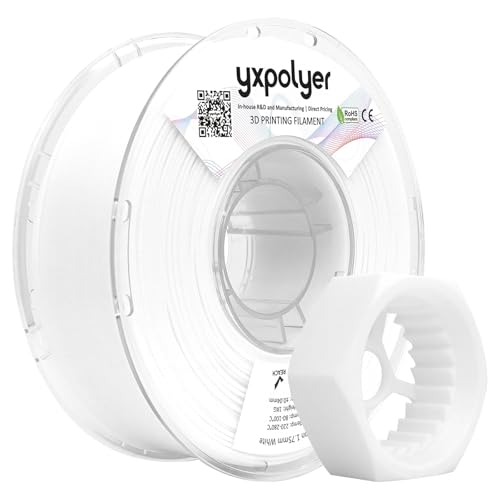
This 1.75mm nylon filament delivers toughness and high temperature resistance, with a melting point up to 381°F (194°C). Best for gears, bearings, and moving components that demand durability beyond standard PLA. It offers low friction and high abrasion resistance, helping parts stay functional longer in demanding environments. Best for industrial or automotive-inspired projects requiring reliability under heat and wear.
Best for: mechanical engineers and hobbyists building durable, moving parts. Limitations: ensure proper moisture control to minimize warping and maintain print quality.
Polymaker Fiberon PA612-CF15 Carbon Fiber Nylon Filament 1.75mm

Fiberon PA612-CF15 is a carbon fiber-reinforced nylon designed for high-speed printing with robust mechanical properties. It shows strong dimensional stability and lower moisture sensitivity than other nylons, making it suitable for industrial tooling and end-use parts. Best for projects needing high strength with improved printability on mainstream printers.
Best for: users seeking durable parts with good first-layer adhesion and reduced warping. Caution: carbon fiber content can increase nozzle wear and requires compatible hardware.
SUNLU Easy PA Nylon Filament 1.75mm — Black

Easy PA from SUNLU blends Nylon 6/66 copolymer for high strength and improved toughness. It offers low warp and reliable dimensional accuracy, making it suitable for large or complex prints. This filament is intended for moving parts like gears or tools that demand durable performance without extensive warping or cracking.
Best for: builders prioritizing print stability and strong, long-lasting components. Limitation: moisture sensitivity remains a factor, so proper storage is essential.
OVERTURE Nylon Filament 1.75mm — Black

This copolymer nylon blends Nylon 6 and Nylon 6.6 for strong, durable parts with good heat resistance (up to 180°C). It prints with minimal odor and reduced warping. It includes a user-friendly reel design with feeding aids, making it easier to manage during longer prints. Best for prototyping and engineering parts requiring toughness without excessive moisture concerns when stored properly.
Best for: engineers and tinkerers needing dependable prints with practical reel features. Caution: nylon moisture sensitivity remains, so seal and store when not in use.
Polymaker Fiberon PA6-GF Nylon Filament 1.75mm — Grey
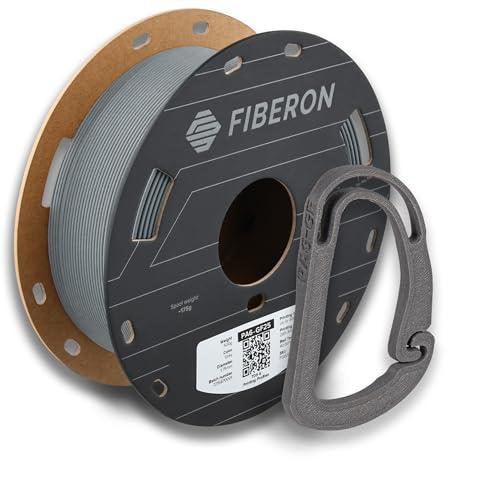
This glass fiber-reinforced nylon demonstrates a strong balance of stiffness, heat resistance, and toughness. It is particularly suited for torsional, tensile, and impact-demanding parts like pedals, brackets, and drone frames. It prints with reliable layer adhesion and high dimensional stability, helping to deliver sturdy, functional prototypes and end-use components.
Best for: applications where high stiffness and heat resistance are needed. Limitation: glass fiber reinforcement can wear nozzles faster and may require hardened tooling.
Buying Guide
What to consider when selecting nylon filament for your 3D printer:
- Print temperature and bed requirements: Nylon typically requires higher nozzle temperatures and controlled environments for best results. Ensure your printer can handle the material without excessive warping.
- Moisture sensitivity: Nylon absorbs moisture from the air, which can affect print quality. Look for low-moisture variants or store spools in sealed containers with desiccants.
- Reinforcement options: Carbon fiber and glass fiber additives increase stiffness and heat resistance but can increase wear on nozzles. Choose a filament with compatible hardware or consider using hardened nozzles.
- Dimensional stability: If you print large parts or parts with tight tolerances, prioritizing filaments noted for low warping or reduced shrinkage is beneficial.
- Printer compatibility: Some filaments print better on higher-end or newer 3D printers. Check first-layer adhesion and recommended printing speeds for best results.
- Ease of use vs. performance: Balance ease of printing with the need for mechanical strength. Filaments marketed as easier to print may still require moisture control and proper cooling strategies.
Frequently Asked Questions
- Is nylon filament good for functional prototypes? Yes. Nylon offers toughness, abrasion resistance, and chemical resistance that suit functional prototypes and moving parts.
- Do I need a heated bed for nylon? In most cases, yes. Nylon prints benefit from heated beds to reduce warping and improve layer adhesion.
- How should Nylon be stored to prevent moisture pickup? Store in a sealed bag or container with desiccants when not in use, and keep away from humidity.
- Will carbon fiber nylon wear out my nozzle faster? Carbon fiber reinforcement can wear nozzles; consider hardened nozzles for long-term use and adjust printing settings accordingly.
- Can nylon be used for automotive parts? Yes, nylon’s heat resistance and chemical tolerance make it suitable for automotive-inspired components, provided the print is designed for the expected stress and environment.